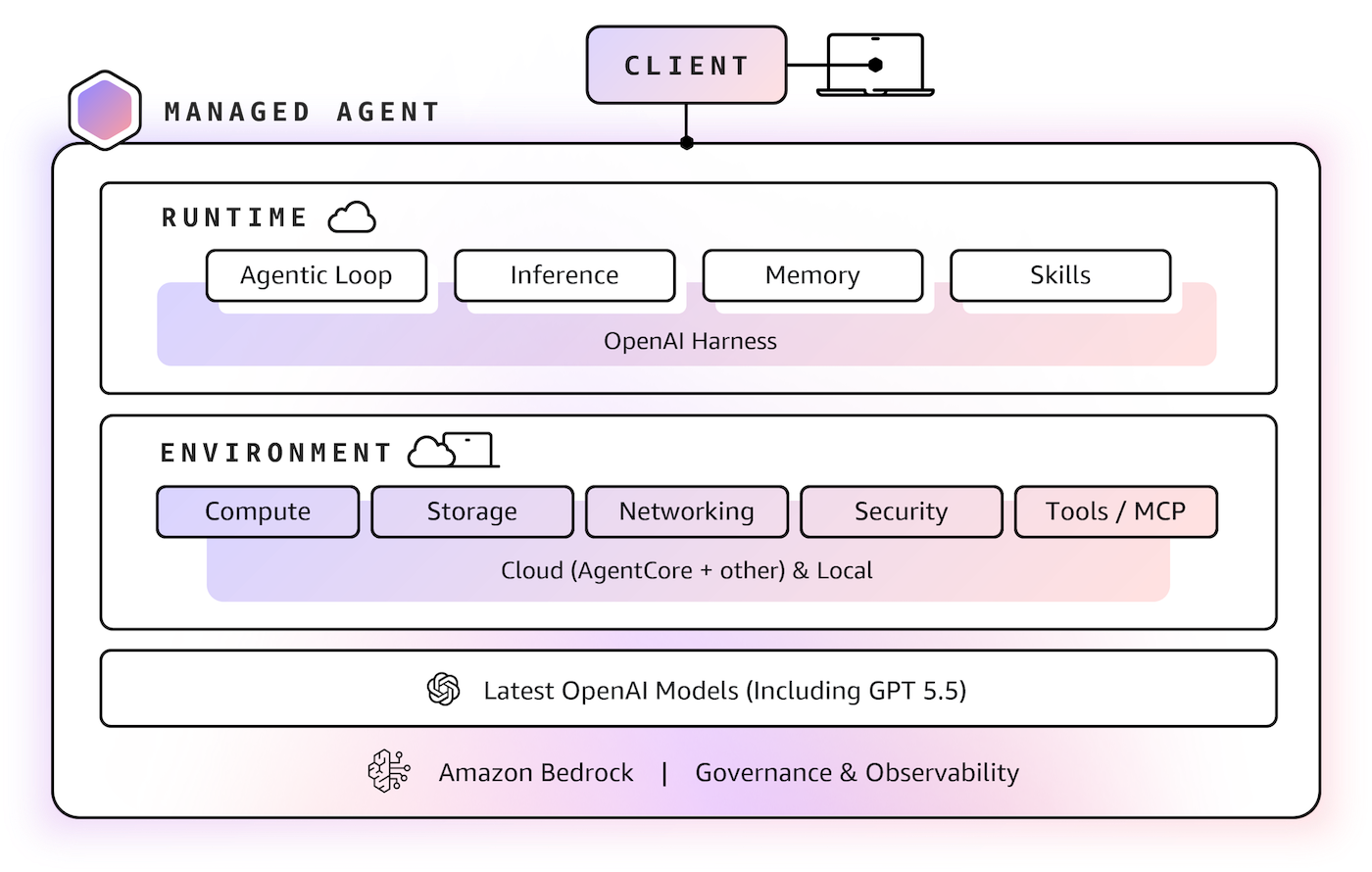
Unlock substantial operational cost reductions and boost efficiency by leveraging the latest AWS AI innovations. Our experts help businesses integrate Amazon Quick, expanded Amazon Connect agentic AI, and OpenAI models on Bedrock to transform workflows and achieve rapid ROI.
Is your enterprise losing millions to hidden inefficiencies? Manual processes, disconnected data, and slow customer responses aren't just frustrating; they're draining your bottom line. The true cost of these bottlenecks extends beyond salaries – it impacts customer satisfaction, employee morale, and your competitive edge. While competitors race to embrace AI, many businesses find themselves stuck, overwhelmed by the perceived complexity and risk of implementation, missing out on immediate, quantifiable gains.
The Unseen Drain: What Inefficiency is Costing You
Consider the average mid-sized enterprise. The cumulative impact of outdated operational models is staggering:
- Manual Data Entry & Processing: Imagine $75,000 annually lost to manual data entry in finance or supply chain, with an additional $50,000 in errors and rework.
- Customer Support Bottlenecks: Each extended customer interaction due to slow information retrieval or agent overload can cost $15-$30. For a company handling thousands of queries, this escalates to hundreds of thousands annually in wasted agent time and potentially lost customer loyalty.
- Inefficient Hiring Processes: A prolonged hiring cycle costs an average of $4,000 per unfilled position per month in lost productivity, with administrative tasks taking up to 60% of recruiters' time.
- Disconnected Information Silos: Employees spend up to 2.5 hours daily searching for information, a hidden cost of over $18,000 per employee per year in lost productivity.
These aren't just minor annoyances; they are significant financial liabilities eating into your profits and hindering your ability to innovate. The cost of not acting is far greater than the investment in a strategic AI solution.
The Solution: Transform Operations with AWS AI
The recent What's Next with AWS 2026 event unveiled a suite of powerful AI advancements designed to tackle these exact challenges, promising to redefine enterprise efficiency and significantly reduce operational costs. These innovations aren't just incremental improvements; they are foundational shifts that allow businesses to automate, optimize, and innovate at an unprecedented pace.
1. Amazon Quick: Your Enterprise's Unified AI Assistant
Imagine an intelligent assistant accessible across your entire organization, instantly providing answers, summarizing documents, and even drafting communications based on your proprietary data. That's the power of Amazon Quick. This new AI assistant for work, complete with a desktop app and expanded integrations, centralizes knowledge and streamlines internal workflows. It means:
- Reduced Information Search Time: Employees get instant, accurate answers, boosting productivity across departments.
- Faster Decision-Making: AI-powered insights from aggregated internal data empower leaders to make informed choices rapidly.
- Streamlined Onboarding & Training: New hires can quickly access institutional knowledge, reducing ramp-up time and associated costs.
2. Expanded Amazon Connect: Agentic AI for Specialized Business Functions
Amazon Connect, already a leader in contact center solutions, has expanded its agentic AI capabilities into four specialized solutions: supply chain, hiring, customer experience, and healthcare. These aren't just chatbots; they are sophisticated AI agents capable of understanding complex requests, automating multi-step processes, and delivering personalized, high-value interactions. This translates to:
- Supply Chain Optimization: Predictive analytics and automated anomaly detection reduce inventory costs and improve logistics efficiency.
- Accelerated Hiring: AI-driven candidate screening, interview scheduling, and personalized communication drastically cut time-to-hire and recruitment costs.
- Superior Customer Experience: Intelligent routing, proactive support, and self-service options powered by AI reduce agent workload and elevate satisfaction.
- Enhanced Healthcare Operations: Streamlined patient intake, appointment scheduling, and information access improve operational flow and reduce administrative burden.
3. OpenAI Models on Amazon Bedrock: Secure & Customizable Generative AI
The expanded partnership bringing OpenAI models (like GPT-5.5, Codex, and Managed Agents) to Amazon Bedrock in limited preview is a game-changer for businesses seeking highly secure and customizable generative AI solutions. Bedrock offers a fully managed service, allowing enterprises to:
- Build Custom AI Applications Securely: Leverage cutting-edge LLMs without managing underlying infrastructure, ensuring data privacy and compliance within your AWS environment.
- Accelerate Innovation: Rapidly prototype and deploy AI-powered features, from intelligent content generation to sophisticated code assistance and data analysis.
- Maintain Data Residency: Critical for regulated industries, Bedrock ensures your sensitive data remains within your specified AWS region, adhering to strict governance requirements.
The Technical Edge: Harnessing AWS AI for Real-World Impact
Implementing these AWS innovations effectively requires a deep understanding of cloud architecture, AI model selection, data integration, and security best practices. It's not about simply 'turning on' AI; it's about strategically engineering solutions that integrate seamlessly into your existing ecosystem and deliver measurable ROI.
For instance, deploying a custom generative AI solution with OpenAI models on Amazon Bedrock involves careful consideration of model fine-tuning, retrieval-augmented generation (RAG) strategies, and secure API integrations. Here’s a simplified Python example demonstrating how to invoke a model on Bedrock:
import boto3
import json

def invoke_bedrock_gpt(prompt_text: str, model_id: str = "arn:aws:bedrock:us-east-1::foundation-model/openai.gpt-5-5-turbo"):
    """
    Invokes an OpenAI model (e.g., GPT-5.5) on Amazon Bedrock.
    Note: This is a simplified example; actual implementation involves more error handling,
    parameter tuning, and possibly streaming.
    """
    try:
        bedrock_client = boto3.client('bedrock-runtime', region_name='us-east-1')

        # Prepare the request payload for a hypothetical GPT-5.5 on Bedrock
        # This structure is an example and might differ based on actual Bedrock integration
        body = json.dumps({
            "prompt": f"Human: {prompt_text}\nAssistant:",
            "max_tokens_to_sample": 300,
            "temperature": 0.7,
            "top_p": 0.9
        })

        response = bedrock_client.invoke_model(
            body=body,
            modelId=model_id,
            accept="application/json",
            contentType="application/json"
        )

        response_body = json.loads(response.get('body').read())
        return response_body.get('completion')

    except Exception as e:
        print(f"Error invoking Bedrock model: {e}")
        return None
Integrating Amazon Connect’s agentic AI solutions, similarly, requires designing sophisticated contact flows, integrating with backend systems, and configuring complex conversational logic. A basic Amazon Connect flow integrating an agentic AI via AWS Lambda might look like this:
{
  "Version": "2019-10-30",
  "StartAction": "PlayPrompt",
  "Actions": [
    {
      "Identifier": "PlayPrompt",
      "Type": "PlayPrompt",
      "Parameters": {
        "Text": "Welcome to our automated customer service. How can I assist you today?"
      },
      "Transitions": {
        "NextAction": "GetCustomerInput"
      }
    },
    {
      "Identifier": "GetCustomerInput",
      "Type": "GetCustomerInput",
      "Parameters": {
        "InputType": "CustomerInput",
        "Text": "Please describe your request. For example, 'I need to check my order status' or 'I want to speak to sales'."
      },
      "Transitions": {
        "NextAction": "InvokeAgenticAI"
      }
    },
    {
      "Identifier": "InvokeAgenticAI",
      "Type": "InvokeLambdaFunction",
      "Parameters": {
        "FunctionARN": "arn:aws:lambda:us-east-1:123456789012:function:ConnectAgenticHandler",
        "FunctionInput": "$.CustomerInput.Content"
      },
      "Transitions": {
        "OnSuccess": "HandleAgenticAIResponse",
        "OnError": "TransferToAgent"
      }
    },
    {
      "Identifier": "HandleAgenticAIResponse",
      "Type": "PlayPrompt",
      "Parameters": {
        "Text": "$.External.FunctionResult.fulfillment"
      },
      "Transitions": {
        "NextAction": "EndContact"
      }
    },
    {
      "Identifier": "TransferToAgent",
      "Type": "TransferToQueue",
      "Parameters": {
        "QueueARN": "arn:aws:connect:us-east-1:123456789012:instance/instance-id/queue/queue-id"
      },
      "Transitions": {
        "NextAction": "EndContact"
      }
    },
    {
      "Identifier": "EndContact",
      "Type": "Disconnect"
    }
  ]
}
These examples illustrate the blend of foundational AWS services, advanced AI models, and custom logic required to build truly transformative solutions. This complexity underscores why partnering with an experienced AI agency is crucial to translate these powerful tools into tangible business value without the pitfalls of DIY experimentation.
Real-World Impact: The Story of NexLogistics
NexLogistics, a medium-sized shipping and fulfillment company, struggled with surging operational costs due to manual inventory management and inefficient customer support for delivery inquiries. Implementing a tailored AWS AI solution, we integrated Amazon Connect's agentic AI for supply chain to automate inventory tracking and optimize routing, reducing human intervention by 60%. Concurrently, an Amazon Quick-powered internal assistant provided real-time answers to customer service agents, cutting average handle time by 35%. Within six months, NexLogistics reported a 28% reduction in operational expenditures related to logistics and customer service, alongside a 15% improvement in on-time delivery rates and a significant boost in customer satisfaction scores. The solution paid for itself in less than four months, demonstrating a clear and rapid ROI.
FAQ
How long does implementation take?
Implementation timelines vary based on the scope and complexity of the solution. A typical project, from initial assessment to full deployment of an AWS AI solution, can range from 8 to 16 weeks. We follow an agile methodology, delivering value incrementally with clear milestones and regular client feedback loops.
What ROI can we expect?
Our clients typically see significant ROI within 3-6 months. This often includes a 20-40% reduction in operational costs, up to 50% improvement in process efficiency, and a tangible increase in customer and employee satisfaction. We focus on quantifying these benefits through pre-defined metrics and post-implementation analysis.
Do we need a technical team to maintain it?
While having an internal technical point of contact is beneficial, our solutions are designed for minimal ongoing maintenance. We provide comprehensive training for your team, detailed documentation, and offer optional managed services to handle updates, optimizations, and ongoing support, ensuring your AI initiatives continue to deliver value without burdening your internal resources.
Ready to implement these powerful AWS AI solutions and unlock massive savings for your business? Book a free assessment at WeDoItWithAI and discover how our expertise can transform your operations.
Original source
aws.amazon.comGet the best tech guides
Tutorials, new tools, and AI trends straight to your inbox. No spam, only valuable content.
You can unsubscribe at any time.